horzt1

horz1

Friday, August 1, 2014

Stringway ML-100


Please note the Stringway is designed differently than the standard drop weights and/or the drop weights with a ratchet mechanism. Hence it is not impacted by those issues.


The Stringway ML-100  is my 2nd and current stringing machine.

The ML-100 could be use as a portable unit, and/or, as a standard mounted stringing machine with the optional stand.


All stringing tools are not included unless you wish to purchase the Stringway clamps for non-badminton stringing ,or, substitutes clamps for badminton (Yonex).

I am using floating clamps vs those attached to the machine. Purchased the Yonex and Gamma clamps for badminton string.

An optional badminton racquet mounting kit is required for the machine - red coloured items in following pix


I am a customer and no way affiliated with Stringway in any commercial manner

I purchased the machine in 3Q2013 (with the optional stand) as the local stringing service was getting expensive with inconsistent quality eg you know the difference upon the first few hits.

Checking the internet, noticed there were now many choices of low cost electronic stringing machines compared to over 10 years ago. Was very tempted to buy a low cost model with a electronic tensioner ... VERY VERY tempted!

Nevertheless I decided against the low cost machine with a electronic tensioner at the 11th hour and ordered the Stringway instead.

Reason?

I required a machine which could provide a consistent result across the stringbed, simple to operate, reliable, and had to be maintenance free for years. Read many good reviews/feedback for the Stringway. In addition, my old flatmate in NZ had previously owned a Stringway and spoke volumes for their machines as well - nothing like word of mouth!!

Summary of my experience with the ML-100 to date:-

Pro(s):
My clients feedback the tension is quite consistent across the stringbed and the results provide nice feedback upon usage
Independent of power supply or electronic issues
Reliable and maintenance free after setup
Solid build quality which provides confidence during usage
Badminton mounting kit provides solid mounting of the racquet
Good ROI for high quality but low volume usage
Good support from factory for post sale enqueries 

Con(s):
Structure holding the racquet could be located closer to the tensioner to lessen string usage (only applicable when using reels)
Tension settings not engraved onto tensioner bar - need to use special ruler provided to set the tension
Need to add your padding(s) to the grippers (some racquets nowadays uses decals instead of the real stuff to decorate the racquet frame)
Need to purchase your own tools eg awl, clamps, hex-keys, etc
Mounting kit required for stringing badminton racquets

Saturday, July 5, 2014

Post regarding tensions on the internet - feedback??? (***Updated***)

Came across the following post on the internet @ http://badminton-coach.co.uk/272/why-egos-and-incorrect-information-about-string-tensions-in-badminton-could-be-doing-more-harm-than-good/ and was referred to http://www.victorsport.com/coach_detail_7439.html?cid=475&utm_source=official+Social+Media&utm_medium=Facebook&utm_campaign=String+Poundage#.U9RsLFy0wOc.facebook by a friend.

Any one with feedback?

A coach once used the following analogy to explain why it was harder to hit a shuttle to the same distance vs using lower tension - imagine the stringbed like a trampoline, the tighter the trampoline, the harder you need to push it to reach the same height as per before.

The article mentions a smaller sweet spot with a higher tension, maybe that explains why we did not hear the "proper boom" much nowdays when a player hits the shuttle using a racquet strung at higher tensions?


Tuesday, July 1, 2014

Tension calibrator for the stringing machine

A tension calibrator is used to ensure your stringing machine is applying the correct tension when in-used.

There are 2 types of tension calibrators in the market - analog (aka "ruler"-type) scale and digital.

If you check online, you would discovered the analog tension devices cost a bomb! Hence I bought a digital tension calibrator instead. 

Please refer to my previous article to reference how a Japanese stringer used the device.

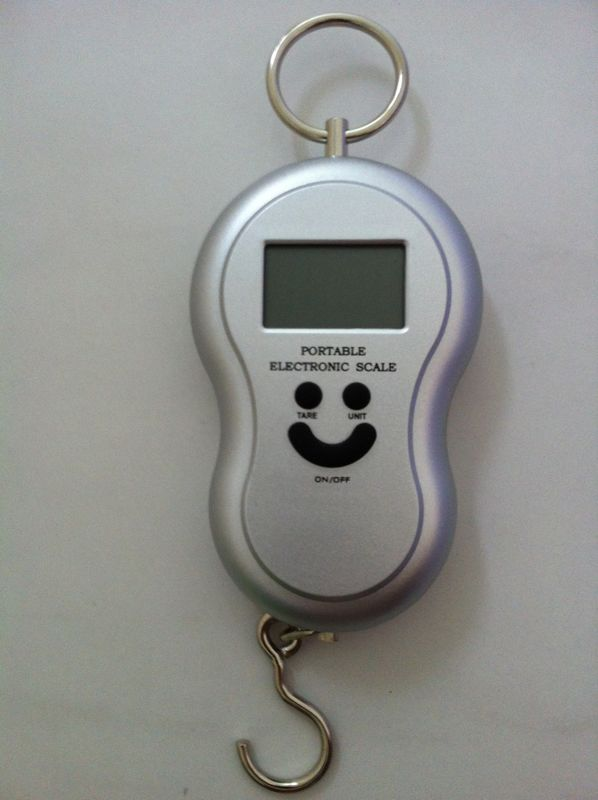
Do shop around before you buy as even the digital version (similar to the below) can be as expensive (USD$30 not inclusive of shipping)! I purchase my unit for about SGD$8 from eBay (inc shipping) and works like a charm. Yes, pretty cute as well!


Simple but functional.

Powered by 2xAAA batteries, it has a maximum capacity of 40lbs - more than adequate for my purposes (at current point in-time) as it is seldom for badminton racquets to be strung above 30lbs. Upon reaching a stable pulling tension (or weight), you will hear a beep and the information will be displayed either in kg or lb. Other functions include a HOLD and CLEAR/RESET and the ON/OFF button (aka "smile bar")

Sunday, June 1, 2014

Useful tool - Starting clamp

When I started stringing in 1989, the starting clamp was not available to the Joe Public.


It is a useful tool to have though not essential for stringing a racquet.

One example is best explained by the author at the following website.

I find it more useful as a finishing clamp rather than a starting clamp. I use it to tighten the knot rather than using a plier. Reason? It's less abrasive on the string than using a pair of pliers.

Please do note - never remove a starting clamp which is holding a tension-ed string as you can damage the area of the string held by the starting clamp eg break outer jacket of string.

Thursday, May 1, 2014

Summary of stringing patterns from internet - Haribito style (***Updated again***)

Sorry no translation but the pix(s) illustrates the methodology.

And apologies - I have removed past paragraph(s) as was confused with another stringing style whereby the sides was loop-back (not top&bottom) and tension-ed a few columns before the sides. Hear-say regarding racquets not lasting as long was with this just mentioned loop-back method which supposely provided better tenstions on the sides and was not Haribito. Personally I do not see the advantage of having better tensions at the sides as the goal or the ideal is to hit the shuttle within the sweet spot to provide optimum transfer of energy from the frame to the shuttle


Tuesday, April 1, 2014

Update - Useful tool to have - a string tension meter

Found the following simple device useful to determine the existing tension of a racquet (when in-doubt).


It is accurate to within +/- 1-2lbs. Hence it may not be fool-proof but does provide a more reliable reading compared to the previous guess-o-matic methodology!

True ... it can only measure up to a maximum of  42lbs but that is more than sufficient for determining the tension of a badminton stringbed at this point in time.

How do you use it?

Firstly center the device to zero before you start.


It has the following on the back of the device.

Place the 2 metal extensions to a cross-point as per in the above pix. The device will be at about a 45-degree angle in the North-East direction aka in the middle between 10-11 o'clock.

Then turn the dial clockwise until the meter shows noon or in-parallel to the string area to be measure - please see pix below.

Recommended places to perform the measurement are as shown below.

Hope the following vide0 explains better...


No more guess-so-matic !!!

Saturday, March 1, 2014